The Wolverine Stack: BPC-157 and TB-500 for Recovery and Healing

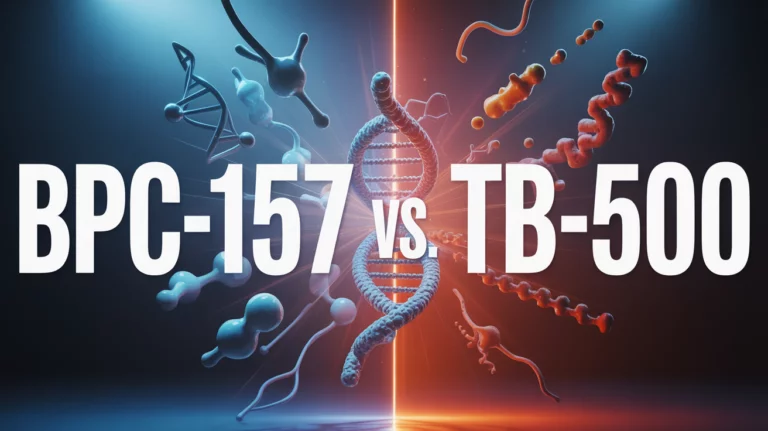
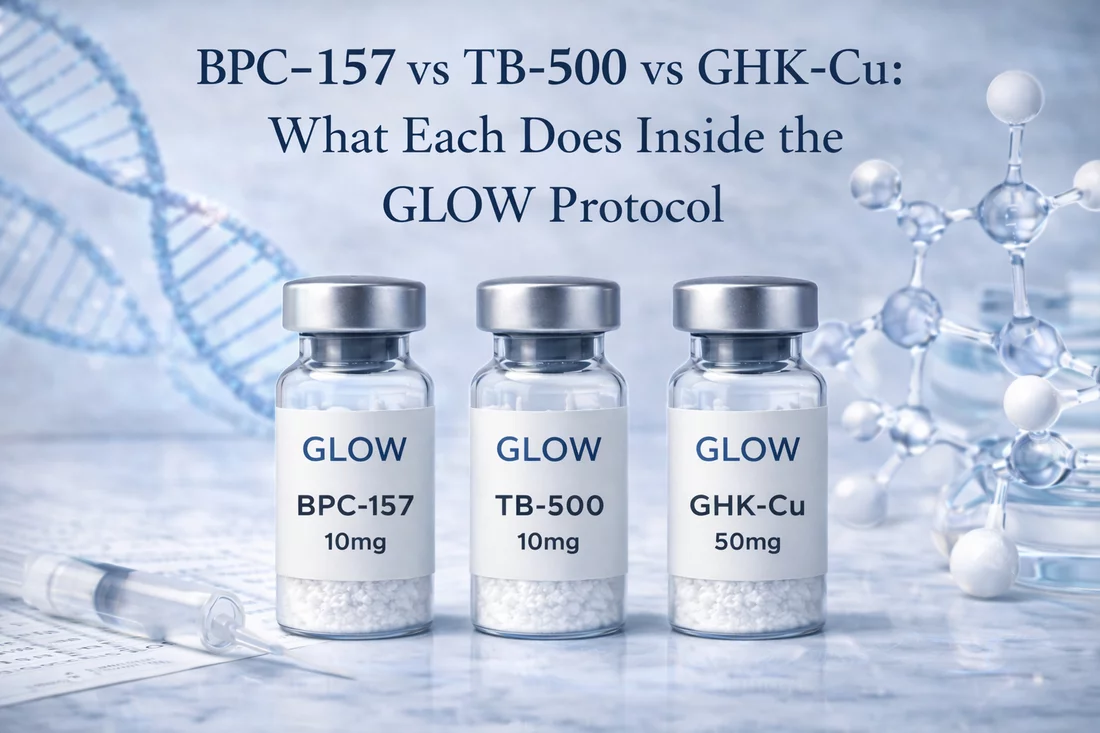
If you've spent any time researching peptides for recovery, injury support, or tissue repair, you've almost certainly come across the combination known as the "Wolverine Stack"—BPC-157 and TB-500. Named for the Marvel character's famous healing abilities, this peptide pairing has become one of the most talked-about protocols in sports medicine, regenerative health, and wellness circles.
But what does the science actually say? Are these peptides worth the attention they're getting? And what should you know before considering them?
This guide breaks down everything you need to know about BPC-157 and TB-500, based on available research and clinical perspectives.
What Are BPC-157 and TB-500?
BPC-157
BPC-157 (Body Protective Compound-157) is a synthetic peptide derived from a protein found in human gastric juice. It's an endogenous peptide—meaning your body naturally produces it in the gut. BPC-157 has earned significant attention for its protective and healing properties throughout the body.
As one orthopedic surgeon and regenerative medicine specialist put it: "If you looked at one of the most powerful peptides to just use for anything, BPC would kind of fall into that category". It has been studied for neuroprotective properties, speeding injury recovery, and supporting gut health.
TB-500
TB-500 (Thymosin Beta-4) is a synthetic version of a naturally occurring peptide that promotes cell migration and tissue repair. While BPC-157 tends to work locally at injury sites, TB-500 is believed to have more systemic effects, helping to direct cells to areas that need repair.
The two peptides are often paired together because they target different aspects of the healing process—BPC-157 handles the localized "road work," while TB-500 directs cellular traffic to the injury site.
How Do They Work?
The BPC-157 Mechanism
BPC-157 works through multiple pathways:
Angiogenesis: Promotes the formation of new blood vessels, improving blood supply to healing tissue
Growth factor stimulation: Increases expression of growth factors involved in tissue repair
Protective effects: Has demonstrated protective properties for the gastrointestinal tract and other tissues
The TB-500 Mechanism
TB-500's primary mechanism involves:
Cell migration: Binds to actin, a protein involved in cell structure and movement, helping cells migrate to injury sites
Anti-inflammatory effects: Modulates inflammatory pathways
Tissue remodeling: Supports the organization of new tissue formation
What Medical Experts Say
The medical community's perspective on BPC-157 and TB-500 is one of cautious interest. In sports medicine circles, these are among the most frequently mentioned peptides for recovery from injuries to tendons, ligaments, cartilage, and muscles.
However, there's a significant gap between public enthusiasm and clinical evidence. As one orthopedic surgeon noted: "The public debate has evolved and advanced much faster than the clinical evidence has demonstrated to support it". The same physician tells patients that peptides are "scientifically interesting, but 'promising' and 'proven' are not the same thing".
The key concern? Neither BPC-157 nor TB-500 has gone through the rigorous FDA approval process that requires randomized, controlled human trials demonstrating both safety and efficacy. As a result, there's no established dosing protocol, no agreed-upon administration route, and no clear understanding of long-term effects.
The Quality Problem
One of the most significant issues with the current peptide market is quality control. Unlike FDA-approved medications that must demonstrate safety and efficacy in humans, research peptides are held to different standards.
Key concerns identified by medical experts include:
Contamination risks: A peptide-testing startup analyzed over 5,000 samples and found that 8% had bacterial endotoxins—the kind of contamination that can cause fever or even septic shock. In some cases, what was in the vial wasn't even what the label said.
Unknown purity: When you purchase peptides online, you have no real idea of the purity of what you're receiving—or even if it is what it claims to be. Products could contain heavy metals, other medications, or various contaminants.
Injection risks: Because peptides typically break down quickly in the digestive tract, most are administered via injection. This bypasses the body's natural defense mechanisms, increasing the risk of adverse reactions.
Dr. Elizabeth Yurth, an orthopedic surgeon and regenerative medicine specialist, is adamant that peptides should only be sourced from FDA-regulated compounding pharmacies. "We've seen some bad things happen with research peptides, and they do have contaminants in them," she warns.
Potential Applications
Despite limited clinical evidence, BPC-157 and TB-500 are being explored for various applications:
Tissue Repair
The most common use case is for injury recovery—accelerating healing in tendons, ligaments, cartilage, and muscles. The interest is understandable: "When an athlete has an injury, the idea of something that could speed recovery or even allow them to avoid surgery entirely is very appealing".
Gut Health
Because BPC-157 is derived from a gastric protein, it has been studied for its protective effects on the gastrointestinal tract.
Neuroprotection
Research has suggested BPC-157 may have neuroprotective properties, though this remains an area of ongoing investigation.
The Foundation First Principle
Perhaps the most important takeaway from clinical experts is this: peptides are powerful tools, but they won't compensate for poor nutrition, inadequate sleep, or hormonal imbalance.
"Micronutrients have to be in place, your hormones have to be in place," Dr. Yurth emphasizes. "These are icing on the cake, and they're not the base".
In other words, before considering peptides for recovery, ensure you're addressing the fundamentals:
Adequate protein intake
Sufficient sleep
Proper hydration
Balanced micronutrients
Addressing any hormonal imbalances
BPC-157 vs. Oral Supplements
A common question is whether oral BPC-157 supplements work the same way as injectable forms. While oral capsules are widely sold, the bioavailability data—how much actually absorbs when swallowed—is a subject of ongoing discussion in the research community. The peptide community generally distinguishes between research-grade injectable forms and oral supplements, with different standards of evidence for each.
Frequently Asked Questions
Q: Are BPC-157 and TB-500 FDA-approved?
A: No. Neither BPC-157 nor TB-500 has been approved by the FDA for human therapeutic use. They are considered research chemicals and are not regulated as medications.
Q: What are the risks?
A: Risks include contamination from unregulated sources, unknown purity, infection from improper injection technique, and unknown long-term effects from altering natural signaling pathways.
Q: Is the "Wolverine Stack" safe?
A: Without high-quality human clinical data, safety cannot be guaranteed. Medical experts recommend caution and emphasize that risk likely outweighs benefit at this time.
Q: Can I get these peptides from a doctor?
A: Some physicians prescribe peptides through regulated compounding pharmacies. This is legally distinct from purchasing research-grade peptides online.
Q: What about GLP-1 medications—are they the same?
A: No. GLP-1 medications like semaglutide are FDA-approved drugs that have undergone rigorous clinical trials demonstrating both safety and efficacy in humans. BPC-157 and TB-500 have not gone through this process.